











From first visit to retainer
Guides for patients and parents
Plain answers on timing, options and cost, then the daily care that keeps braces and retainers working.
Before treatment
Timing, options and cost
Each guide answers one question in brief, then opens the page that covers it in full.
 First visits
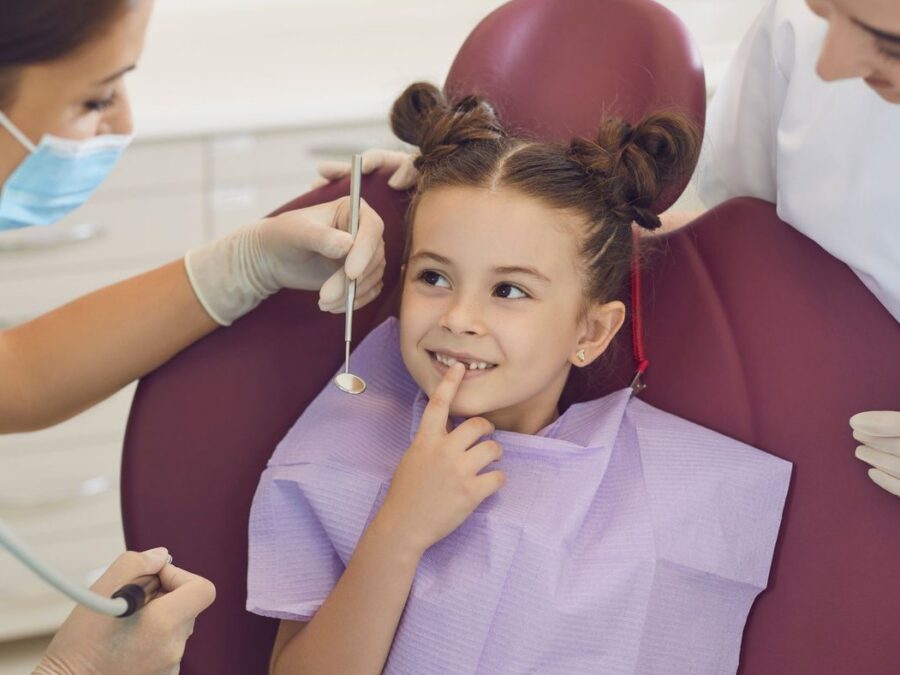
What happens at a first dental visit
When to book it, and what happens in the short lap exam. The first dental visit Timing
Is my child ready for braces?
The signs to watch for, and why a check by age seven helps. Early orthodontics Every age
Straightening teeth at any age
How treatment differs for children, teenagers and adults. Orthodontics at every age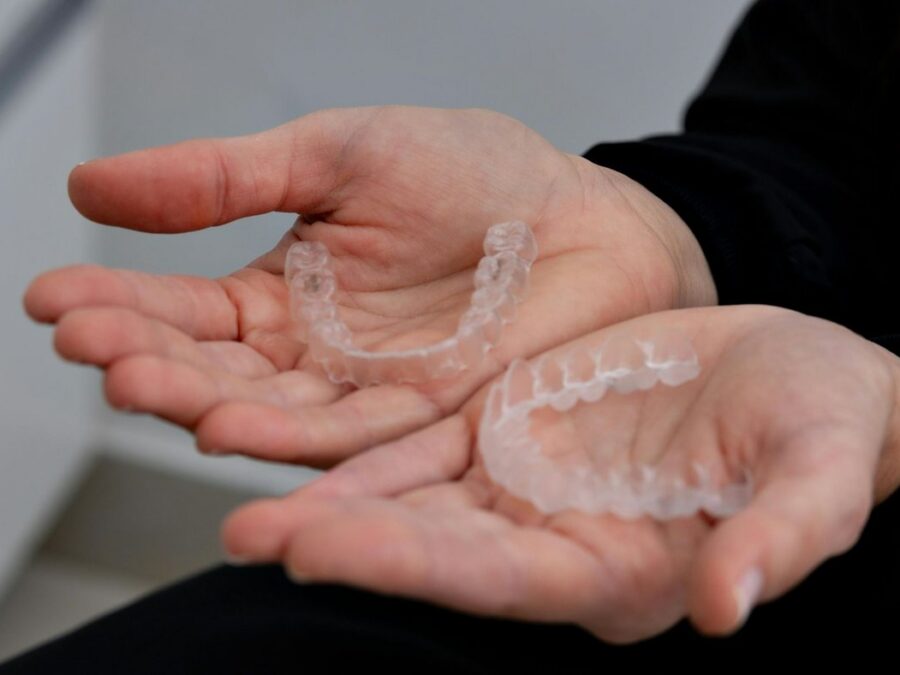 Aligners
Invisalign or braces: which is better?
Which bites clear aligners suit, and when braces work better. Invisalign and clear aligners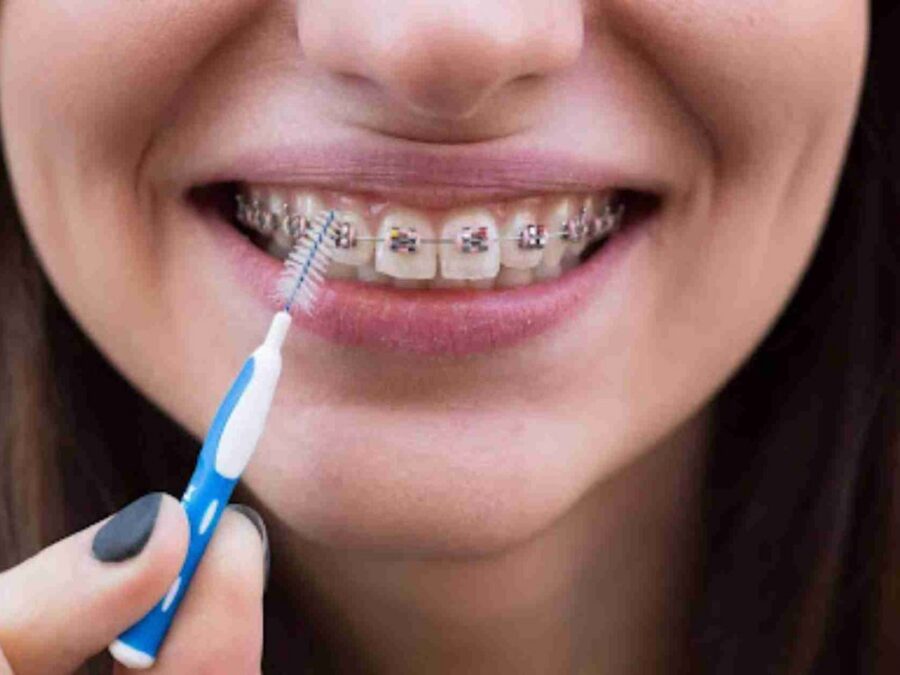 Braces
Are traditional braces right for you?
The bites braces suit best, and what fitting involves. Traditional braces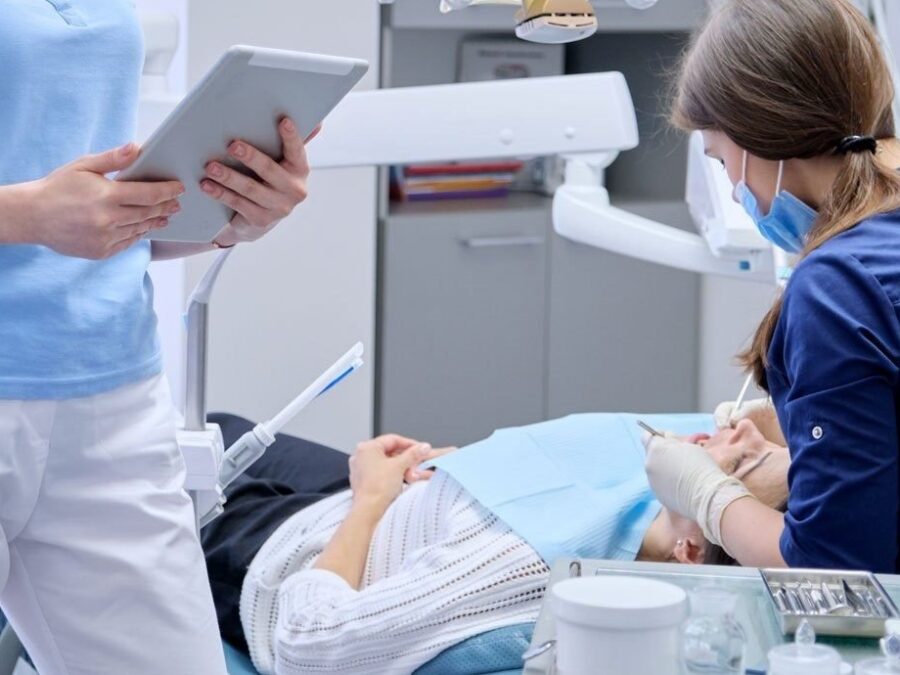 Cost
Cost
Paying for braces
Orthodontic benefits, payment plans and HSA or FSA funds. Insurance and financingDuring and after treatment
Living with braces and retainers
Our own care guides: the daily routine, food, small repairs, retainers and appliances.
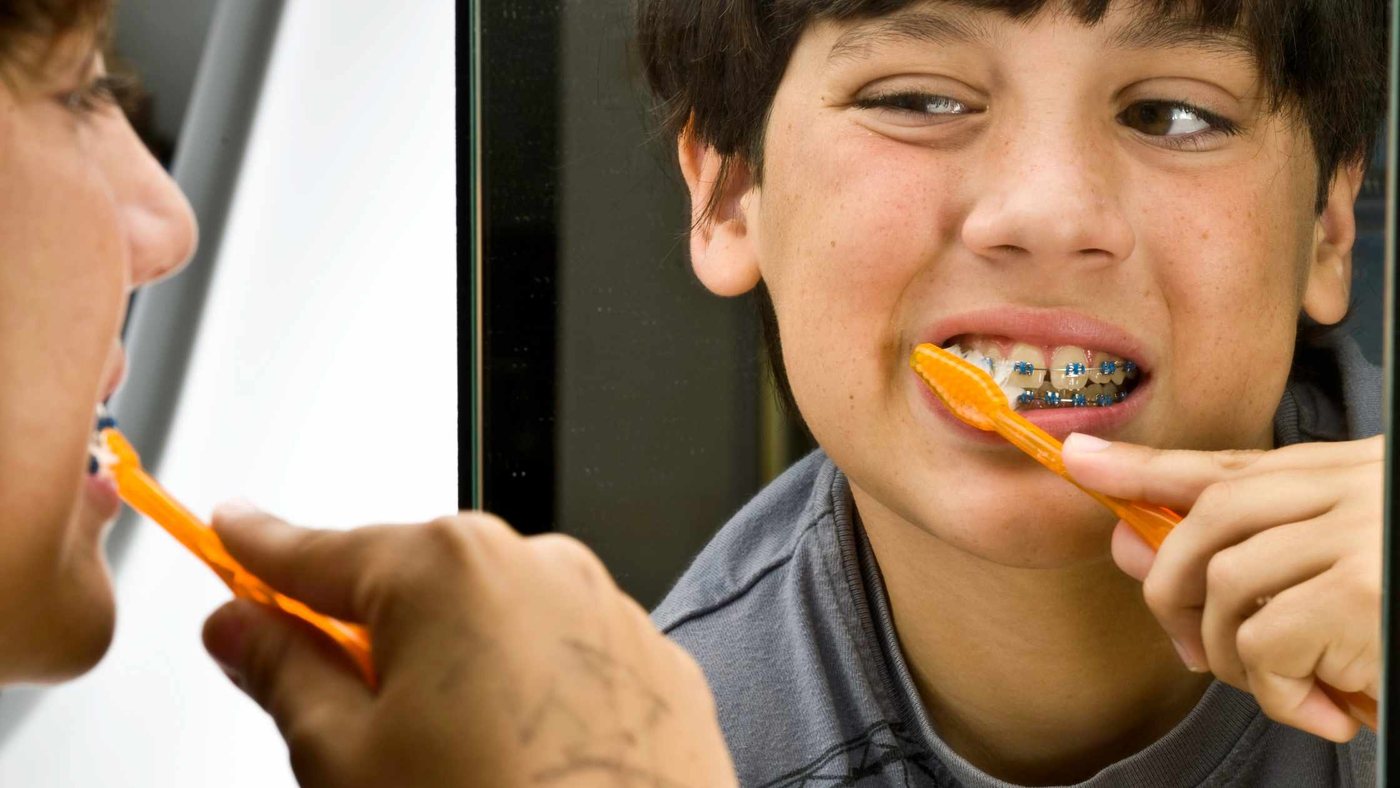 Brushing after every meal
Something sore, loose or broken? Call the office and the team will tell you whether it can wait.
973-706-8339
Daily care
Brushing and flossing with braces
A soft brush at the gum line after every meal, and a threader to floss under the wire.
Brushing
- Use a soft-bristled toothbrush, or an electric toothbrush made for orthodontic care. Ask the team which one they recommend.
- Rinse first to loosen food, then angle the brush at 45 degrees to reach around the brackets and the wire.
- Brush each tooth at the gum line in small circles, and clean the fronts, sides and chewing surfaces.
- Brush after every meal with a fluoride toothpaste, and rinse well at the end.
Flossing
- Use a floss threader or an orthodontic flosser to pass the floss under the main wire.
- Curve the floss into a C shape around each tooth and slide it up and down, just under the gum line.
- Draw it out gently and re-thread it for the next pair of teeth, without pulling hard on the wire.
With clear aligners
The routine barely changes: take the aligners out to eat or drink, brush and floss as you did before treatment, then put them back in.
Why it matters
Clean teeth and healthy gums keep treatment on schedule. Plaque trapped around brackets can lead to cavities and gum problems that slow progress down.
Read the full Braces 101 guide
Food
Eating with braces
Soft foods for the first sore days, then most meals cut small, and what to skip.
The first few days
Teeth are often sore at first, so choose soft foods that need little chewing:
- Smoothies, without whole nuts or seeds
- Warm, not hot, soups with smooth or finely blended ingredients
- Mashed potatoes, scrambled eggs and yogurt
- Well-cooked pasta
After the first week
Most soreness eases and many usual meals are back on the menu. Cut firmer foods into small pieces and chew with your back teeth.
- Tender chicken, turkey, fish, meatballs or slow-cooked meat, cut small
- Steamed or roasted vegetables rather than raw, crunchy ones
- Bananas, berries, melon, peaches and seedless grapes, with apples and pears cut into thin slices
- Rice, quinoa and other well-cooked grains
- Soft bread, tortillas, pancakes and muffins without nuts or seeds
- Cheese, cottage cheese and yogurt
Foods to avoid
- Chewy: bagels, licorice and chewy candy strain the brackets.
- Crunchy: popcorn, ice and hard candy can break brackets and wires.
- Sticky: gum and caramel cling to the braces and are hard to clean off.
- Hard: nuts, and hard fruit such as whole apples unless cut into small pieces.
If you slip up
Check for a loose wire or bracket, brush carefully to clear any trapped food, and call the office if anything has moved. When eating out, choose softer dishes and use a knife and fork rather than biting into a large sandwich.
Read the full Braces 101 guide
Small repairs
When a wire or bracket comes loose
What to do at home about a poking wire, a lost elastic or a loose bracket.
Many small problems can be managed at home until your next visit. These are temporary fixes, so call the office for advice or to book a repair.
A wire that pokes
Use the eraser end of a pencil to push the wire gently into a more comfortable position. If it will not move, cover the end with a small piece of orthodontic wax. Do not cut the wire yourself, because a loose piece could be swallowed or inhaled.
A loose or missing elastic
The small elastics that hold the wire to each bracket sometimes come off, and you may be able to put one back with clean tweezers. A lost rubber elastic can usually wait until your next appointment if nothing feels sore or loose. A loose wire tie can have a sharp end: bend it back with a cotton swab or a pencil eraser, and call if you cannot, or if several have come off.
A loose bracket or band
A loose bracket usually stays attached to the wire. Do not remove it. Hold it steady with a small piece of orthodontic wax, or cover it with wax, until your appointment.
Soreness
Some discomfort after braces are placed or adjusted is normal. Rinse with warm salt water, take an over-the-counter pain reliever if needed, and choose soft foods while it lasts.
A small kit for home
- Orthodontic wax
- Clean tweezers
- A small, blunt tool, such as the back of a spoon
- An over-the-counter pain reliever
If anything causes real discomfort, or you are not sure what to do, call the office. A problem left too long can affect the treatment plan.
Read the full Braces 101 guide
After braces
Wearing and caring for your retainer
Why teeth drift back without one, how to clean it, and how long to wear it.
Why it matters
Once braces or aligners come off, teeth can drift back toward where they started, and it can happen faster than people expect. Wearing a retainer as directed protects the result.
Types of retainer
- Metal (Hawley) retainers combine wire with sturdy acrylic. They are durable and can be adjusted.
- Clear retainers are thin, transparent trays. They are less noticeable, but can wear out sooner.
- Permanent retainers are a thin wire bonded behind the front teeth, so there is nothing to remember.
Caring for it
- Clean it every day with a soft toothbrush and the method the team recommends.
- Keep it in its case whenever it is out of your mouth, including while you eat.
- Keep it away from hot water and other heat, and do not bend the wires.
How long to wear it
Plans vary. Most patients start with full-time wear for several months, then wear it at night for a few years, and after that a few nights a week for the long term. Bring it to follow-up visits so its fit can be checked.
If it breaks or stops fitting
A retainer that feels slightly tight after a few nights off means the teeth have started to move. If it is broken, painful, or clearly too tight or too loose, stop wearing it and call the office to have it checked, repaired or replaced. Clear retainers often need replacing every one to two years.
Read more on the retainers page.
Read the full Braces 101 guide
Appliances
Orthodontic appliances, explained
What each appliance does, from space maintainers and expanders to elastics, headgear and retainers.
Some treatment plans use an appliance before braces or aligners, or alongside them. These are the ones the orthodontists use and what each one does. Your orthodontist will explain any appliance in your own plan.
Guiding growth and space
- Space maintainer: holds a gap open when a baby tooth has to come out well before it would fall out on its own, so the permanent tooth can come in where it should.
- Palatal expander: widens the upper jaw with gentle pressure on the upper molars each time it is adjusted. Your orthodontist shows you when and how to adjust it. Once the jaw is wide enough, it stays in for several months to hold the expansion.
- Habit-breaking appliance: helps correct a habit such as a tongue thrust or thumb sucking. A tongue crib, for example, hangs on two rings at the back of the mouth and stops the tongue pushing against the teeth.
Correcting the bite
- Elastics (rubber bands): improve how the upper and lower teeth fit together. They work far better when they are worn exactly as prescribed.
- Face mask: used for an underbite (a Class III bite). A frame with forehead and chin pads attaches to an appliance inside the mouth to bring the upper jaw forward and down. The body does most of its daily growth roughly between 6 PM and 6 AM, so it works best worn from around dinner time and all night.
- Headgear: used for an overbite or an underbite. It gently restricts further forward growth of the upper teeth and jaw.
- Forsus appliance: an alternative to headgear for growing adolescents. It helps correct a large overbite, improves how the teeth fit, and may prevent the need for jaw surgery.
- Herbst appliance: a fixed appliance that reduces an overbite by encouraging the lower jaw forward and the upper molars back. It is used mostly for younger, growing children and is worn for about 12 to 15 months.
- Bionator: a removable appliance for a Class II bite with a deep bite. It holds the lower jaw forward and guides how the back teeth come in.
- Twin block: two removable pieces, one upper and one lower, that work together to bring the lower jaw forward. It is worn full time, even while eating, comes out for cleaning, and is made of smooth acrylic with few wires.
- Bite plate: used at the start of treatment for a deep bite or an open bite, or to protect against grinding. Elite offers both removable and fixed bite plates.
During and after braces
- Separators (spacers): small rubber rings placed between teeth to make room for orthodontic bands at the next visit. Avoid sticky foods, toothpicks and floss around them.
- Positioner: finishes the last tooth movements. With full cooperation it is usually needed for four to eight weeks.
- Retainers: removable or fixed, they hold the teeth in their new positions after treatment. A fixed retainer is a thin wire bonded behind the upper or lower front teeth. Wear yours as directed so the teeth do not move back.
A question about an appliance in your plan? Call the office at 973-706-8339.
Next steps
Still have a question?
The FAQ page answers most of what is not covered here. For anything about your own treatment, call the office.
- Braces 101 guides Caring for braces, food, repairs and retainers, in full, with videos.
- Articles from the practice Every article Elite has published, on orthodontics and children’s dental care.
- Frequently asked questions Orthodontics, pediatric dentistry, insurance and booking, answered in brief.
- Contact and directions Phone, hours and directions to 61 Berdan Avenue, Wayne.
Mon 9-5 · Tue-Thu 9:30-5:30 · Fri 9-4 · select Sat 8:30-1:30