










On this page
- The Journey Begins Long Before the First Loose Tooth
- Why Do Baby Teeth Fall Out?
- When Do Kids Usually Lose Baby Teeth?
- Your Child’s First Loose Tooth: An Exciting Milestone
- What Happens if a Tooth Falls Out at School?
- Should You Pull a Loose Baby Tooth?
- Foods to Eat When a Tooth Is Loose
- What If My Child Isn’t Losing Baby Teeth Yet?
- What Are “Shark Teeth”?
- Do Kids Lose Their Baby Molars Too?
- Why Regular Dental Visits Matter During This Stage
- A Pediatric Dentist Can Help Every Step of the Way
- Around Age 7: The Perfect Time for an Orthodontic Evaluation
- From Baby Teeth to an Adult Smile
- Helping Your Child Feel Confident
- Every Child’s Timeline Is Different
- Frequently Asked Questions
However, every child develops at their own pace, so it’s completely normal for some children to lose their first baby tooth a little earlier or later.
At Elite Orthodontics & Pediatric Dentistry, we understand that every stage of your child’s smile is important. From your baby’s very first tooth to the day they lose their last baby tooth, our team helps families throughout Wayne and Northern New Jersey navigate each milestone with confidence. This guide answers the most common questions parents have about losing baby teeth and explains when it’s time to schedule a visit with a pediatric dentist or orthodontist.
The Journey Begins Long Before the First Loose Tooth
Although parents often ask when do kids start losing baby teeth, the story actually begins years earlier.
Most babies get their first tooth between 6 and 12 months of age, though some are earlier and others are later. By age 3, most children have a complete set of 20 primary teeth, also known as baby teeth or milk teeth.
Baby teeth do much more than create adorable smiles. They help children:
- Learn to chew properly
- Develop clear speech
- Maintain space for permanent teeth
- Support healthy jaw growth
- Build confidence during childhood
Healthy baby teeth lay the foundation for a healthy adult smile.
Why Do Baby Teeth Fall Out?
Many parents assume baby teeth simply “get loose,” but there’s an amazing process happening beneath the gums.
As permanent teeth begin developing, they slowly dissolve the roots of the baby teeth. Once most of the root disappears, the baby tooth no longer has a strong anchor and naturally becomes loose.
Eventually, the tooth falls out, making room for the permanent tooth underneath.
This natural process is called tooth eruption and occurs over several years.
When Do Kids Usually Lose Baby Teeth?
While every child is unique, this is the general timeline parents can expect.
| Baby Tooth | Typical Age Lost |
| Lower central incisors | 6–7 years |
| Upper central incisors | 6–7 years |
| Lateral incisors | 7–8 years |
| First molars | 9–11 years |
| Canines | 9–12 years |
| Second molars | 10–12 years |
Most children lose all 20 baby teeth by around age 12.
Remember that this is only a guide. A difference of several months, or even a year, can still be perfectly normal.
Your Child’s First Loose Tooth: An Exciting Milestone
For many families, the first loose tooth happens around kindergarten or first grade.
It often becomes a major topic of conversation at school. Children love comparing loose teeth with classmates and eagerly anticipating a visit from the Tooth Fairy.
Parents may notice their child:
- Wiggling the tooth constantly
- Talking about classmates losing teeth
- Smiling differently because of the loose tooth
- Feeling both excited and nervous
These are all perfectly normal parts of growing up.
What Happens if a Tooth Falls Out at School?
One question many parents don’t think about until it happens is what to do if a tooth falls out during the school day.
Fortunately, losing a baby tooth at school is common.
If your child’s tooth falls out:
- Have your child rinse their mouth if possible.
- Apply gentle pressure with a tissue if there’s minor bleeding.
- Save the tooth in a small container if they’d like to keep it.
- Let the school nurse know if the bleeding continues.
Don’t panic if your child accidentally swallows a baby tooth during lunch. In most cases, this is harmless and doesn’t require treatment.
Should You Pull a Loose Baby Tooth?
Parents frequently wonder whether they should help remove a loose tooth.
In most cases, it’s best to let nature take its course.
Encourage your child to:
- Gently wiggle the tooth with clean hands.
- Eat normally.
- Avoid forcing the tooth out if it’s still firmly attached.
If a tooth is hanging by only a tiny piece of tissue and is bothering your child, gentle removal may be appropriate. However, never yank a tooth that isn’t ready.
Removing a baby tooth too early may cause unnecessary pain and bleeding.
Foods to Eat When a Tooth Is Loose
Most children continue eating normally, but if a tooth is especially loose, softer foods may feel more comfortable.
Good options include:
- Yogurt
- Eggs
- Pasta
- Mashed potatoes
- Soup
- Applesauce
- Smoothies
Crunchy foods like apples or carrots may actually help naturally loosen a tooth that’s ready to come out.
Avoid:
- Sticky candy
- Hard jawbreakers
- Ice chewing
- Extremely crunchy snacks if the tooth is painful
What If My Child Isn’t Losing Baby Teeth Yet?
One of the biggest reasons parents search when do kids start losing baby teeth is because they’re worried their child hasn’t lost any.
Usually, there’s no reason for concern.
Children develop at different rates based on genetics and overall growth.
However, schedule an evaluation if:
- Your child has no loose teeth by age 8.
- A permanent tooth begins erupting behind a baby tooth (“shark teeth”).
- A baby tooth isn’t becoming loose even though the adult tooth is visible.
- Your child has swelling or significant pain.
Your pediatric dentist can determine whether everything is developing normally.
What Are “Shark Teeth”?
Sometimes a permanent tooth erupts behind the baby tooth before the baby tooth falls out.
Parents often call these shark teeth because there appear to be two rows of teeth.
While this can look alarming, it’s actually fairly common.
Many cases resolve naturally once the baby tooth loosens and falls out. If it doesn’t, your pediatric dentist may recommend removing the baby tooth to allow the permanent tooth to move into its proper position.
Do Kids Lose Their Baby Molars Too?
Many parents are surprised to learn that children lose their baby molars.
The first baby molars usually fall out between ages 9 and 11, while the second baby molars are typically lost between 10 and 12.
These larger teeth make room for permanent premolars.
Why Regular Dental Visits Matter During This Stage
The years when children begin losing baby teeth are an important time for routine dental care.
Regular checkups allow your pediatric dentist to monitor:
- Tooth eruption
- Oral hygiene
- Cavities
- Jaw development
- Bite alignment
- Space for permanent teeth
These visits help identify concerns early before they become larger problems.
A Pediatric Dentist Can Help Every Step of the Way
Losing baby teeth is a normal part of growing up, but regular dental visits ensure your child’s smile is developing properly. A pediatric dentist can monitor tooth eruption, identify concerns early, provide preventive care, and answer questions about loose teeth, permanent teeth, and oral hygiene.
Whether your child is getting their first tooth or preparing for their last baby tooth to fall out, our Pediatric Dentistry team provides gentle, family-centered care designed to keep young smiles healthy through every stage of development.
Choosing the right pediatric dentist is one of the best ways to support your child’s oral health from infancy through the teenage years. If you’re looking for tips on selecting the right provider for your family, read our guide on How to Choose the Best Pediatric Dentist in Northern NJ, where we explain what credentials, experience, and qualities parents should look for when choosing a dentist.
Around Age 7: The Perfect Time for an Orthodontic Evaluation
Many parents assume braces don’t happen until the teenage years.
The American Association of Orthodontists recommends that every child receive an orthodontic evaluation by age 7. This doesn’t mean every child will need braces, but it allows developing bite or jaw concerns to be identified while they’re easier to manage.
At this stage, orthodontists can evaluate:
- Crowding
- Bite problems
- Jaw growth
- Missing or extra teeth
- Developing alignment issues
Not every child needs early treatment, but identifying problems early often allows for simpler treatment later.
From Baby Teeth to an Adult Smile
The transition from baby teeth to permanent teeth doesn’t happen overnight.
| Age | What’s Happening | What Parents Should Know |
| 6–12 months | First baby teeth erupt | Begin brushing with a soft toothbrush and schedule your child’s first dental visit by age 1. |
| Age 3 | All 20 baby teeth are usually present | Baby teeth help with eating, speech, and guiding permanent teeth into place. |
| Ages 5–7 | First baby teeth become loose | This is when most children lose their first tooth, often around kindergarten or first grade. |
| Ages 6–12 | Permanent teeth gradually replace baby teeth | Continue routine dental visits to monitor eruption and oral health. |
| Around Age 7 | Orthodontic evaluation recommended | An early evaluation can identify developing bite or jaw concerns before they become more complex. |
| Around Age 12 | Most permanent teeth have erupted | Continue preventive care and monitor wisdom teeth as your child grows. |
| Late teens–early 20s | Wisdom teeth may erupt | Not everyone needs wisdom teeth removed, but they should be evaluated regularly. |
Helping Your Child Feel Confident
Losing baby teeth is one of childhood’s most memorable milestones.
Whether your family celebrates with a visit from the Tooth Fairy, a special keepsake box, or simply lots of photos, these traditions can help children feel excited about a change that might otherwise seem a little scary.
Some fun ways to celebrate include:
- Leaving a note for the Tooth Fairy.
- Taking a “first missing tooth” photo.
- Reading children’s books about losing baby teeth.
- Creating a special tooth pillow or keepsake box.
- Writing down the date each baby tooth falls out as part of a family memory book.
Parents often ask how much the Tooth Fairy should leave. The answer is simple; there’s no right amount. Every family celebrates differently, and the most important part is creating a positive, memorable experience that fits your family’s traditions.
If your child feels nervous about losing a tooth, reassure them that every child goes through this stage. Celebrate their growing smile and remind them that permanent teeth are a sign they’re growing up.
Every Child’s Timeline Is Different
If you’re wondering when do kids start losing baby teeth, remember that there isn’t one “perfect” schedule.
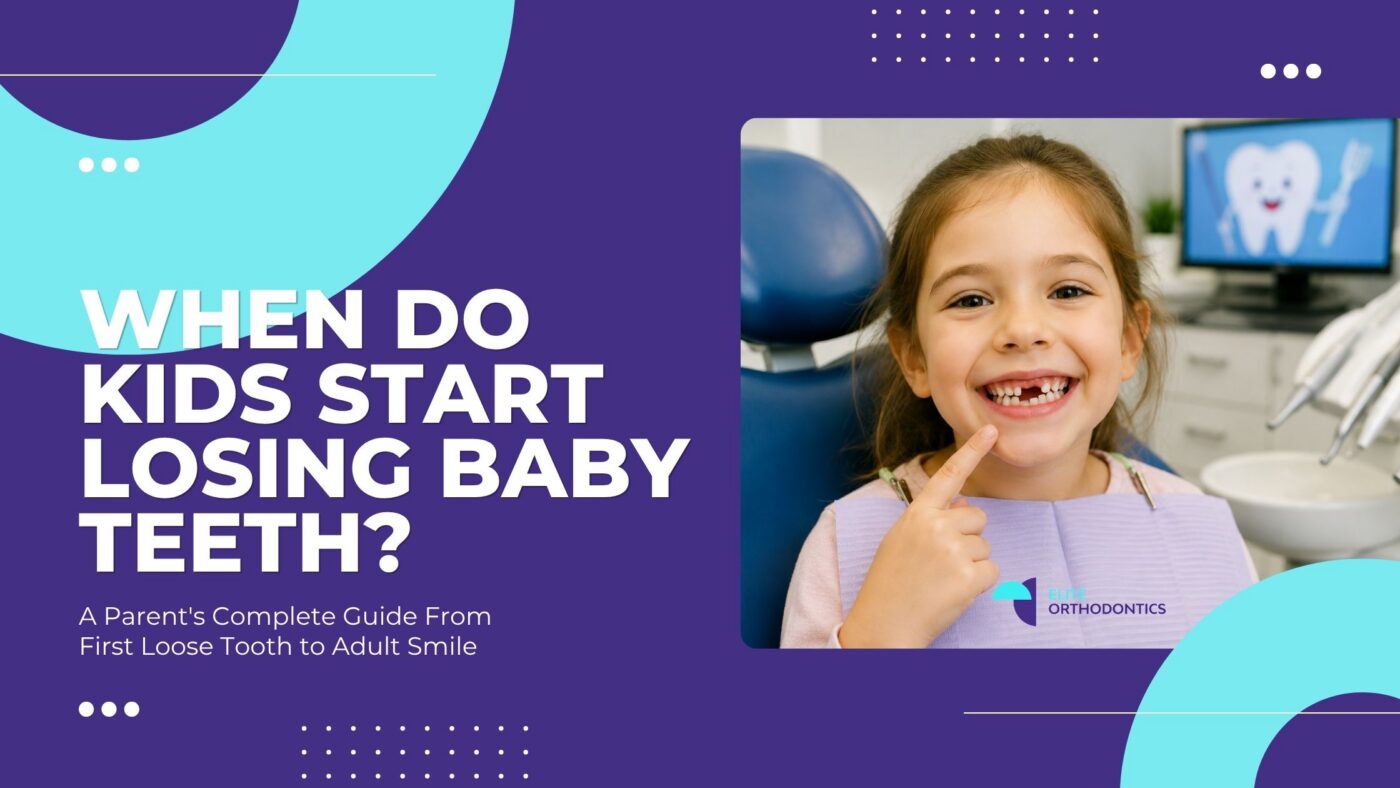
Most children lose their first baby tooth between ages 5 and 7, but healthy dental development varies from child to child.
The most important thing is monitoring your child’s growth with regular dental visits and asking questions whenever something doesn’t seem quite right.
At Elite Orthodontics & Pediatric Dentistry, we’re here to help families throughout Wayne and Passaic County navigate every stage of childhood dental development, from your baby’s very first tooth to your teenager’s confident adult smile.
Every child’s smile develops on its own timeline. While most children begin losing baby teeth between ages 5 and 7, regular dental examinations are the best way to ensure healthy development from infancy through adolescence. At Elite Orthodontics & Pediatric Dentistry, our pediatric dentists and orthodontic specialists work together to provide comprehensive care under one roof, helping children throughout Wayne, Passaic County, and Northern New Jersey build healthy, confident smiles for life. Schedule a consultation today.
Frequently Asked Questions
Is it normal for a 5-year-old to lose a baby tooth?
Yes. Many children lose their first baby tooth around age 5 or 6, although some start slightly earlier or later.
What if my child is 7 and hasn’t lost any baby teeth?
Many children don’t lose their first tooth until age 7. If there are no loose teeth by age 8, it’s a good idea to discuss it with your pediatric dentist.
Should I pull my child’s loose baby tooth?
Usually, no. Let the tooth loosen naturally. Gentle wiggling is fine, but avoid forcing it out before it’s ready.
Can my child swallow a baby tooth?
Yes. Accidentally swallowing a baby tooth is generally harmless and doesn’t require treatment.
Do all baby teeth fall out?
Yes. Nearly all children lose all 20 primary teeth, which are replaced by permanent adult teeth.
Do kids lose their molars?
Yes. Baby molars eventually fall out and are replaced by permanent premolars, usually between ages 9 and 12.
When should my child see an orthodontist?
The American Association of Orthodontists recommends an initial orthodontic evaluation by age 7, even if braces aren’t needed right away.
How many teeth do kids have?
Most children have 20 baby teeth, while adults typically have 32 permanent teeth, including wisdom teeth.